A multitude of coloured buckets and
bowls bloom in the sand next to Cuito Cuanavale’s high street. The sight is as refreshing as a spring flower-bed. And like a flower-bed they wait for water. Down by the river, a water- truck is sucking
water from the Cuito River to fill those containers and water tanks around the
town.
I am at the site of the last major
battle that the South African Defence Force fought in Angola. Cuito Cuanavale, a town considered strategic
during the war, is situated some 300 kilometres north of the border with
Namibia. It marked the end of government
controlled territory. To the south,
Jonas Savimbi’s UNITA rebels were in control, supported by the SADF. The outcome of the battle is still disputed,
but whatever your view, most will agree that Cuito Cuanavale was reduced to
rubble during the fighting.

Our Land Rover crosses the post-war
bridge and we trundle down to the riverbank below where some men are washing
their cars and motorbikes. It seems like
a futile exercise in a town where the high street is surfaced with sand. Yet in a place so haunted by the horror of
war, this most mundane of activities is one of many I witness that shows people
are getting on with their lives ten years after the end of the war. I join some of the men by stripping off and
washing several days of travel-dust off my body in the cold river. As I stand thigh deep in the water, rinsing
soap suds from my hair, a fisherman poles past in his makoro, known in Angola
as a chata or canoa.
Further on, the long, brown
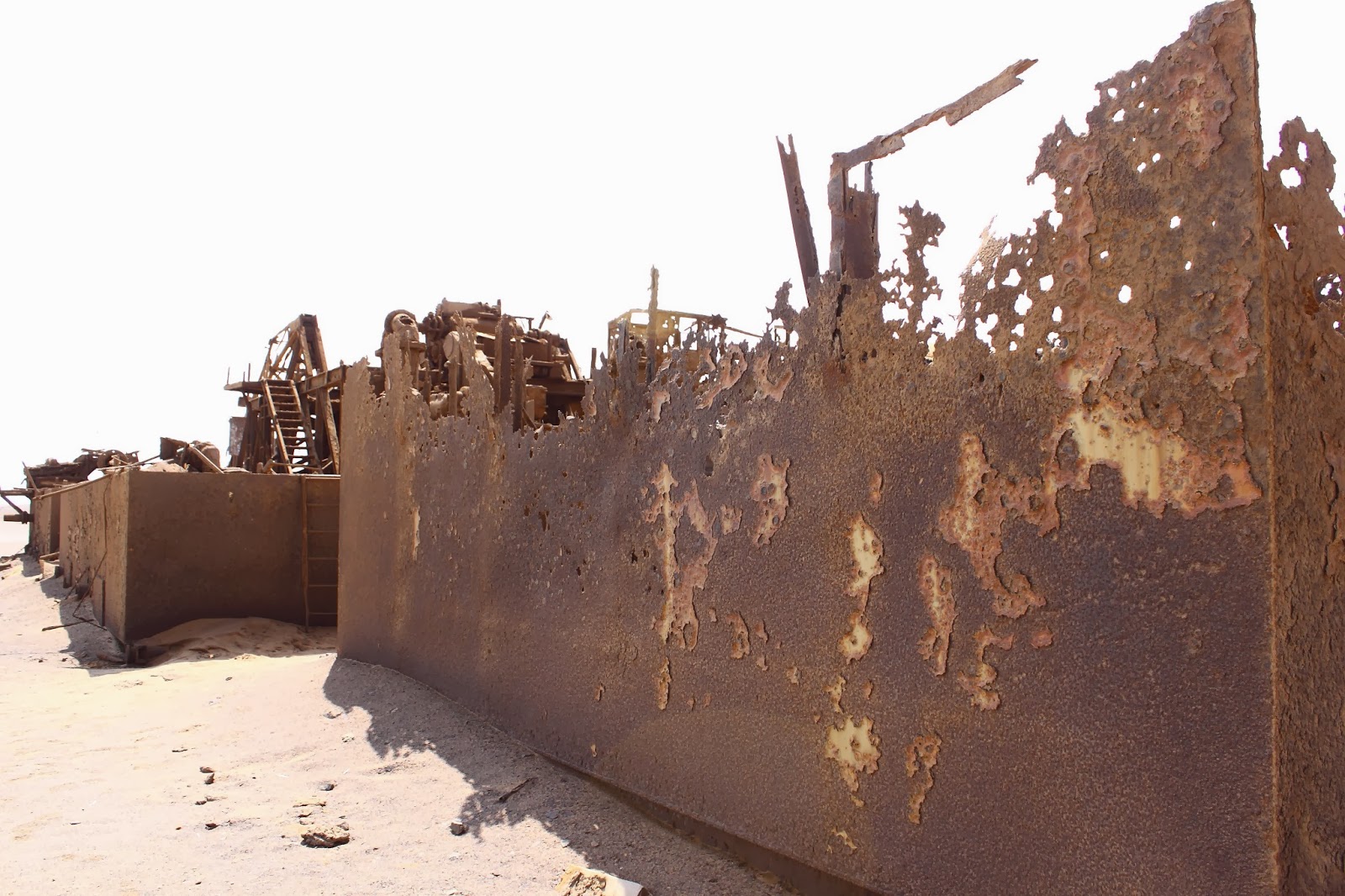
flood-plain grass doesn’t quite conceal the rusting dome of a tank’s
turret. I take a picture of an
anti-aircraft vehicle, its cannons still pointed to the sky. The remains of an abandoned pontoon bridge lies
rusting in the silt below the road.
We drive east past an outlying settlement, the
Land Rover growling its way through the deep sand track into the Tumpo
Triangle. This area was first pointed
out to me as we drove past Cuito Cuanavale Airport which sits high on the Cuito
ridge. “Down there,” said Patrick, our
expedition leader pointing to the east, “that’s the Tumpo Triangle, where the
South African tanks got caught in the minefield. It must have been hell for them.”
A man in his late twenties is our
guide to Tumpo. He tells us that he
looked out over the flood-plain during the siege. He was seven years old. He and his family sheltered from the
bombardment in underground shelters. His
grandmother and several other close relatives were killed by South African
shells.
We round a slight bend in the track
and come nose to nose with a Halo Trust truck.
The Halo Trust is the non-governmental organisation, once patronised by the
late Princess Diana, which clears minefields in many of the world’s past and
current war zones. The truck is packed
with people returning from a long day of lifting mines. There’s an impasse. Neither we nor they are keen to leave the
track to allow the other to pass. If the
Halo Trust crew is nervous about leaving the track then so am I. Our guide is jittery. He’s from Cuito and knows the dangers of
landmines all too well. “Don’t leave the
road!” he warns. Eventually the drivers
compromise, each with a set of wheels on the track and the other set off
it. The two vehicles pass so closely
that at one point I fear that the massive truck will tear the side off our
Landy.
A little further on we stop at a
small parking area, a clearing just off the track. It is marked out by neatly placed stones. There’s a little thatched shelter and a Halo
Trust sign. I gaze to the east, towards
the tree line. It’s where the South
African assaults came from. Occasionally
a gentle breeze brushes the blonde grass.
The cooling Landy engine ticks away behind me. What I’m looking at is just bush. It’s quiet and peaceful here and in another
part of Southern Africa I could be scanning for elephant, or kudu or even lion,
but this place holds memories of war and the predators are buried in the
sand.
Patrick suggests that we follow the
little footpath that leads from the parking area off into the bush. He tells us that there are SADF tank wrecks out
there. He’s been to them before and
thinks he can find them again. One by
one we shake our heads. Our guide
doesn’t know where they are, he’s never been.
As for me, the last time I was in Angola I had some near misses. It’s probably safe on the footpath cut by
the Halo team, but I have no intention of being blown to bits by a land-mine
twenty-five years after my war here ended.
Back in town we pull over to buy
some supplies at a little general store.
Like many of the buildings here it is made from grey breeze-blocks. It’s hot inside and some children are
watching a soap-opera on an ancient television set. We buy our essentials and leave. The children
don’t flinch from the screen. When we
start off again Patrick has to engage low range to get us out of the deep sand
next to the road. I find myself
wondering why money has been put into building a new airport when the residents
have no running water. Why an expensive
war monument has been built when electricity comes from small generators. So much effort has gone into creating a
“peace garden”, ironically full of tanks and rocket launchers and even a MiG23 fighter
jet, when one needs a four by four just to pull off the high-street. These questions are echoed by several Angolans
I meet later in my journey. People here
are resilient, they have to be, but there are murmurs of dissent.
As in many countries, the
marketplace is the hub of the community and Cuito’s colourful little market
represents a community getting on with life.
Patrick is in search of fresh fish and I’m looking for fresh vegetables
for my dinner. I don’t speak Portuguese
so I wander around plucking up the courage to ask for prices. Eventually I buy a selection of delicious
looking vegetables including tomatoes, onions, garlic and peppers. Other stalls sell t-shirts and baseball caps,
rucksacks and household implements. The
market is busy and it seems that there’s not much in the way of daily
necessities that one can’t buy here.
Patrick can only find dried fish
though. “You have to get up very early
in the morning and go to the river at about six o’clock if you want fresh fish,”
our host informs him. It’s too early so he doesn’t get his fresh,
Cuito River, fish.
Once Cuito Cuanavale was a scene of
devastation, and the war still clings to it in the form of military wreckage
and bad memories. Yet, as people do
everywhere, the inhabitants are rebuilding their town and living their lives,
blooming like those colourful buckets in the Angolan sand.